Operational excellence, built into how work runs.

Kora turns manual procedures into governed workflows your organization owns: AI agents run the routine path, people decide the exceptions, and every run is measured so the process keeps improving.
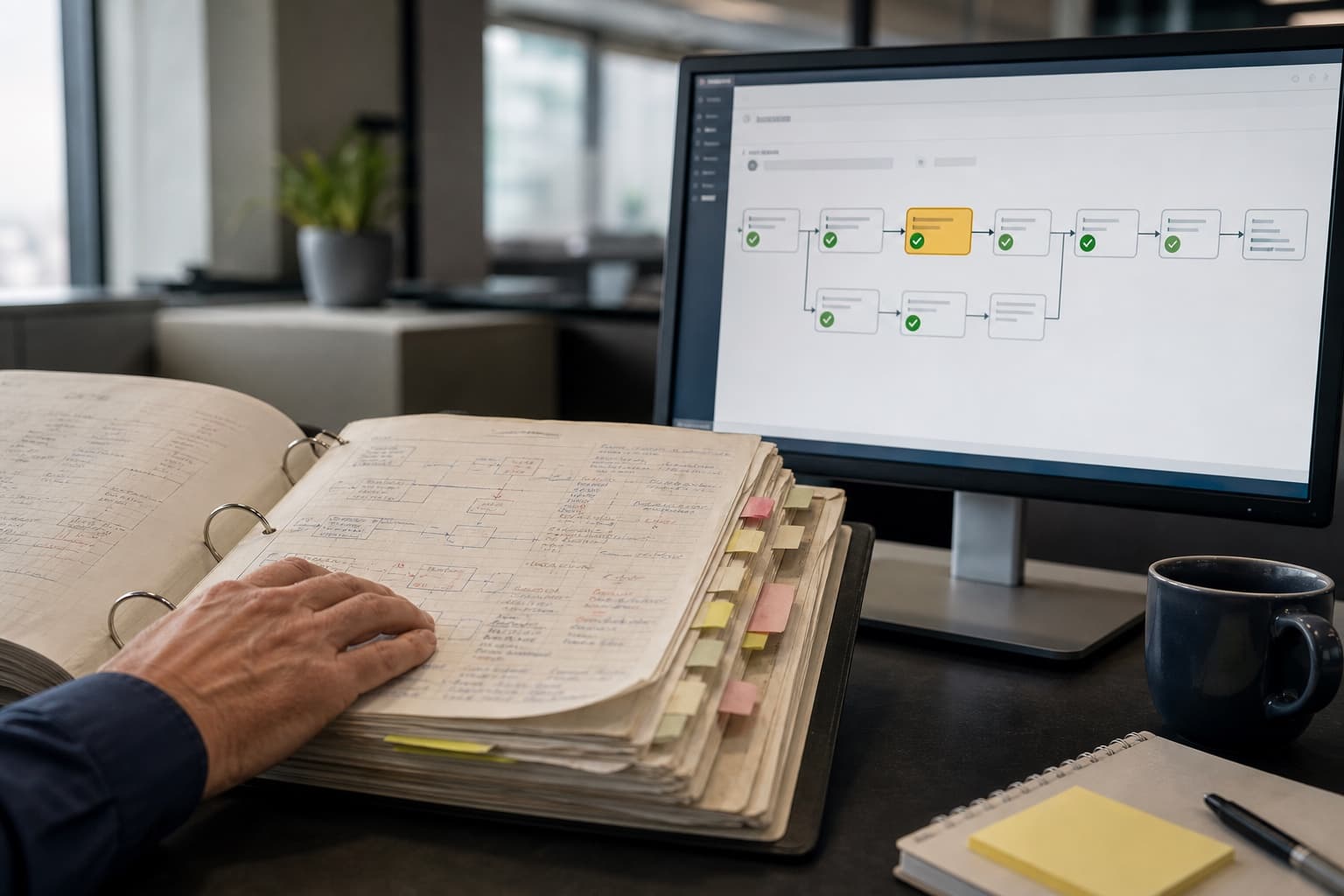
A worn paper procedure binder lies open on an operations desk, dense with hand annotations and index tabs, beside a monitor running the same process as a clean workflow whose steps carry green checks with one held in amber.
§ 01 · The approach

Operational Excellence

Operational excellence needs a system to run in, not a binder. Kora is that system: manual, undocumented procedures become governed workflows, versioned assets with clear ownership, measured performance, and a built-in path to continuous improvement.

  1. Marked-up procedure printouts and sticky notes scattered across a desk, hands squaring them into one aligned stack, a monitor behind showing a single clean workflow: ad hoc work becomes one standard.
    01

    Standardize how work runs

    One released definition of the process replaces tribal knowledge, so every run, human or agent, follows the same path and exceptions are visible instead of invisible. New people run the current released version from day one, not a stale copy of the procedure.

  2. A pen pointing at the one bar standing out on a monitor's chart, a printed run chart with a trend line on the desk below: workflow performance measured from real runs.
    02

    Measure real performance

    Per-run metrics show cycle time, exception rates, and where work waits, measured from actual execution rather than from interviews or workshops, so you fix the real bottleneck instead of the one everyone assumes.

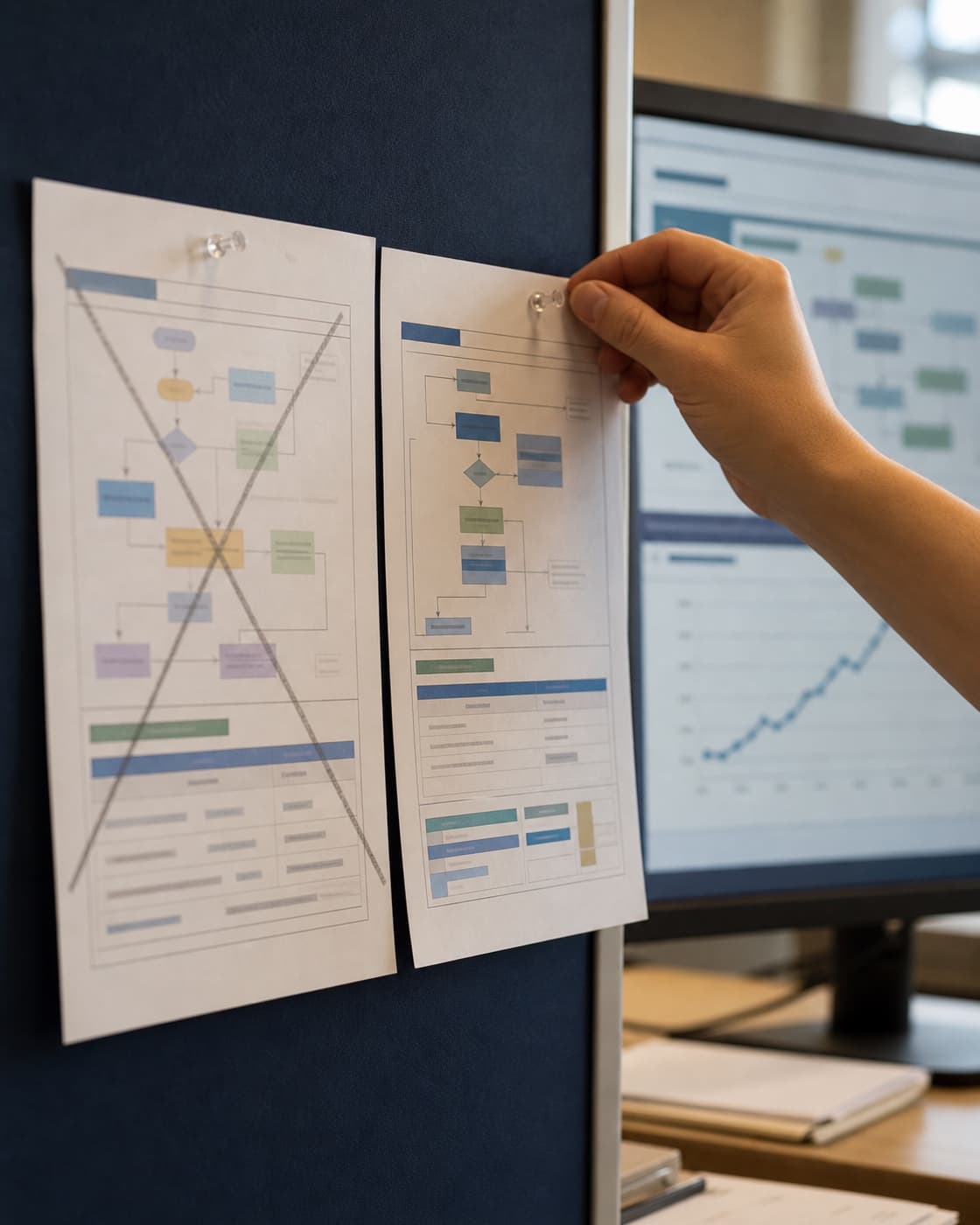
  3. Two versions of a printed process sheet pinned side by side on an operations board, the older crossed through in pencil as a hand pins the newer revision up: the workflow improves on every run.
    03

    Improve with every run

    Run data feeds directly into the next process version, and release control lets you ship improvements safely instead of freezing the process in place. Each change ships as a new released version, so improvements stay deliberate and reversible.

The loop repeats

Every improvement becomes the next released standard, so the operation compounds run after run.

§ 03 · FAQ

Questions, answered.

What teams ask when they evaluate Kora for this problem.

A system where your processes run, not just get documented. In Kora each procedure becomes a governed workflow: versioned, owned, executed by people and AI agents together, and measured on every run, so the standard, the execution, and the improvement loop live in one place.

Classic BPM diagrams a process and hands execution to developers or vendors. In Kora the executable workflow is the process: your organization owns it, releases changes to it, and measures it from real runs.

RPA automates keystrokes against existing screens and breaks when those screens change. Kora runs the process itself as a governed workflow: an agent handles the routine path under a released version, people approve the exceptions, and every run leaves a hash-chained record. You get standardized execution and evidence, not brittle screen scripts.

Usually an operations leader or a process owner brings the first workflow: one real process, typically one with painful exceptions or audit pressure. Model it as a workflow, run it governed, and expand from what the run data shows.

Every run records cycle time, where work waited, exception rates, and the outcome, measured from actual execution rather than from interviews. Because the data is captured per run, you can see how the process performs over time and where it is worth improving.

Every run produces metrics and evidence. Teams review where work slows down or fails, adjust the process definition, and release the improved version, so optimization is a loop rather than a project.

Yes. Lean and Six Sigma tell you which process to improve; Kora is where the improved process runs. You release the standard as an executable workflow, measure it from real runs, and roll each improvement into the next released version, so continuous improvement has a system of record instead of living in binders.

No. A workflow orchestrates the process across the tools you already run, through prebuilt integrations and human steps, and writes results back to them. Kora governs how the work flows and the evidence it leaves; your systems of record stay in place.
§ 04 · Next step

Bring one procedure that lives in a binder.

In a demo, bring a manual procedure your team runs today. We will run it as a governed workflow: standardized on a released version, measured from real runs, and improving with every release.