Governed AI workflows for testing and QA labs.

Run lab operations as workflows your team owns, where AI handles the routine analysis, people approve what matters, and every result carries its full provenance.
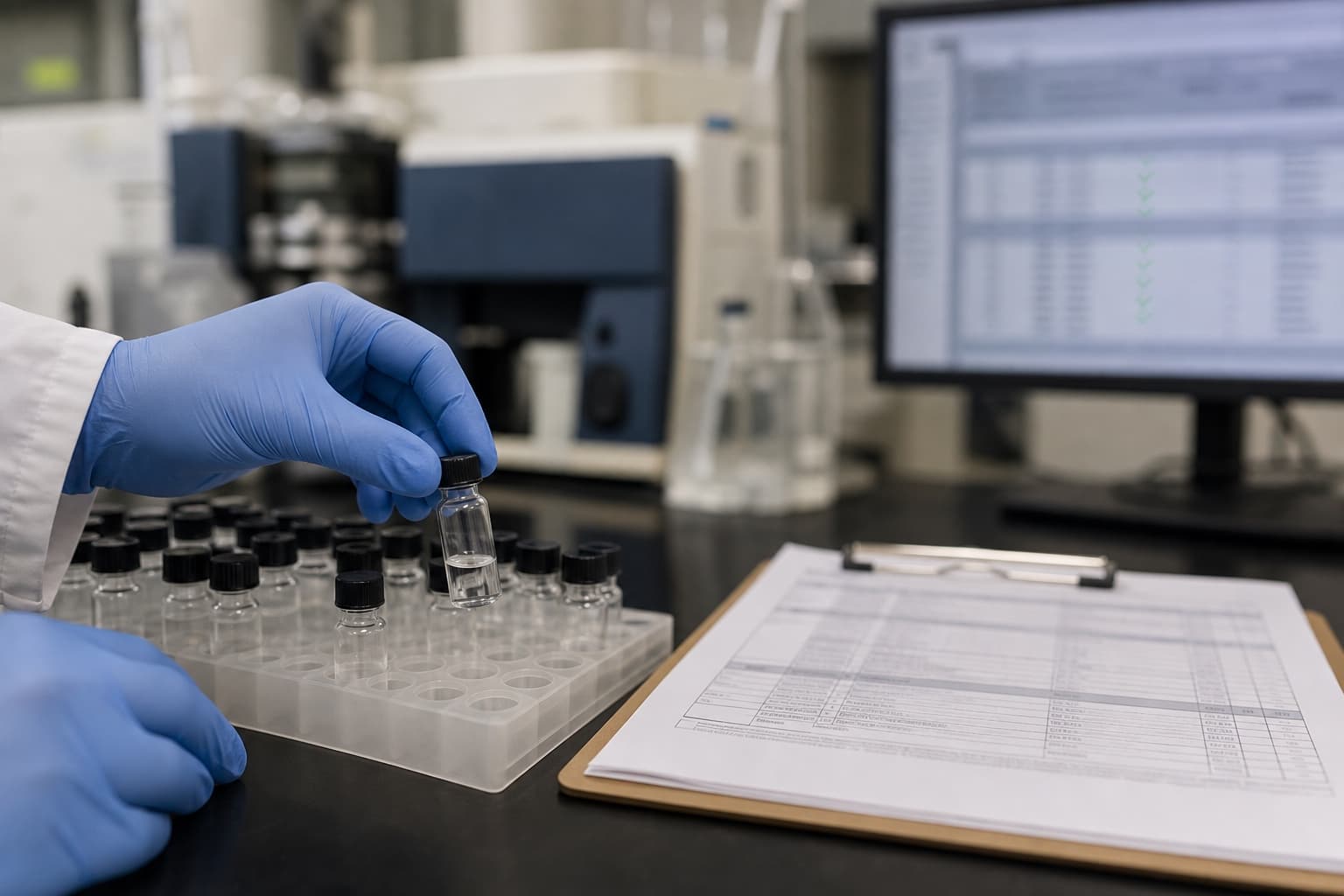
Gloved hands placing a sample vial into a rack on a lab bench beside a printed test method sheet, an analytical instrument and a screen of cleared results softly blurred behind.
§ 01 · The approach

Life sciences and labs

Kora runs laboratory testing and QA as governed workflows: test setup, execution, QA checks, analysis, reporting, and approval run under a released process version, with human approval gates and a hash-chained, replayable record that carries each result's provenance for ISO/IEC 17025 and data-integrity expectations.

01

Every result carries its provenance

A result is never just a number. The record ties it to the method and version, the operator, the instrument, and the sample or batch it came from, so it holds up under review.

02

Release authority stays with policy and people

AI runs the routine analysis and drafts the interpretation, but never authorizes release itself. An explicitly released policy may clear eligible in-spec, low-risk results, and a reviewer decides every exception before results leave the lab.

03

One trail across systems and sites

Test systems and LIMS feed one governed workflow, so results are comparable across instruments, labs, and sites rather than trapped in separate exports.

§ 03 · FAQ

Questions, answered.

What teams ask when they evaluate Kora for this problem.

Each test runs as a released workflow that records the method version, operator, instrument, sample context, and every QA decision into a hash-chained, replayable record. That gives you the traceability and data integrity ISO/IEC 17025 expects, captured at execution rather than reconstructed later.

Yes. Agents run the routine analysis and draft an interpretation, but they never authorize release on their own. An explicitly released policy may clear eligible in-spec, low-risk results, and a reviewer decides every exception. The record shows the draft and the release path.

No. It orchestrates the workflow across the test systems and LIMS you already run, reading results and writing approvals back. It governs the process and the provenance, it does not replace those systems.

The record is attributable, contemporaneous, and original by construction: who acted, which method version ran, the instrument and sample context, and every QA decision are captured into a hash-chained, replayable record at execution time. Data-integrity reviews start from that record instead of stitched-together exports.

With one method or one review step that hurts: often QA result approval or a reporting step under audit pressure. The lab runs it as a governed workflow next to the LIMS it already uses, sees the provenance and evidence each run leaves, and expands method by method.
§ 04 · Next step

Bring one test method.

In a demo, bring a method or review step you run today. We will run it as a governed workflow next to your LIMS and show the provenance and approval record every result leaves.